
ABOUT MONICA STANESCU
Your turn to share your story!
Why not message me at +44 7436869716, or email me [email protected], or book an introductory session.
My interest in psychology and therapeutic approaches sparked about twenty years ago. Going through various adverse childhood experiences, being surrounded by unhealthy behaviours, and displaying unhealthy behaviours, understanding the mind and human behaviours becomes something of high interest. Hence, I went on to study Psychology, and I found it amazing! I initially wanted to study clinical psychology, but I was looking for more, so I decided to pursue a career in the Human Resources and Recruitment field. This time of my life was truly spectacular! I worked and met so many wonderful people. I still carry some wisdom from that time. My favourite is: “I am too poor to buy cheap shoes”, and I genuinely believe it, but I also love shoes, so it’s a good excuse when I want to buy another pair. I developed strong diplomatic and professional skills, learned to adjust my communication style, and refined my people skills, which, over time, correlated with a high level of empathy and authenticity, becoming my strengths as a person and now as a therapist.
Time passed, and when I discovered a Health Psychology Master's at the University of the West of England, it felt like the right approach to follow. I have always believed in the biopsychosocial approach, which holds that the environment in which we grow and live is essential to our development. That was the time when I truly understood how traumatic it had been to receive the diagnosis of a chronic condition in my early twenties, how it had impacted my identity as a woman and how it had taken over my being and my life. I went through all the stages of grief, and it turned my world upside down. But with great support around me, therapy, and friends, I managed to rebuild myself, the way I feel about myself. This time, in a conscious manner, by my values and beliefs, my wishes for the future, and how I wanted to conduct my life. Immediately after receiving my MSc qualification, I began working as a Specialist Mentor, providing mental and emotional support to students who are challenged by various disabilities, long-term conditions, and/or learning difficulties. When I studied for my undergraduate degree, I remember feeling that my mind was scattered. I had no notion of time management or prioritisation, struggled to study and focus, and lacked motivation for a proactive approach to preparation ahead of exams. I would end up not sleeping well, not eating the last two days before exams, and struggling to study.
Now, I understand that I needed guidance and support, and nowadays, someone does not need to spend years trying to change unhealthy beliefs and behaviours to healthy ones. You need the right support, tailored to your unique needs at that time. Hence, working with students holds a significant place in my heart. In my quest to develop as an individual and professional, I began studying the Person-Centred Approach (more commonly known as counselling). The counselling course was mind-blowing from a personal development perspective. I had to go back to therapy to process, challenge and integrate old, deeply ingrained beliefs. At a professional level, developing and applying the Person-Centred Approach made a significant difference; however, I soon identified a new obstacle: trauma. Hence, I studied and integrated a one-year Trauma-Informed and Somatic Psychotherapy course, which allowed for a thorough exploration of emotional experiences and their expression through somatic work. This approach enables a healthy and rapid process and integration of our lived experiences.
Studying Cognitive-Behavioural Hypnotherapy was the cherry on top! I have always been fascinated by hypnotherapy, and I believe it would beautifully complement my set of skills to be able to offer a safe space and contain any challenges that one might bring into the therapeutic setting, thereby enhancing the process by deepening self-confidence and self-esteem through targeted suggestions that reach the core of being. I now possess well-rounded skills and professional expertise to support individuals in their transformative journeys. However, the most important thing is that I have grown significantly due to the extensive knowledge I’ve accumulated, which my high level of empathy and non-judgmental approach have enhanced. I am currently enrolled as a trainee counsellor studying at Level 5, and I am integrating the person-centred approach not only in my professional life but also in my personal one; it has become a lifestyle. I am happy to share this with anyone who might need a safe space to figure out ways to overcome emotional obstacles or to live well with daily challenges, such as managing stress, delivering a presentation, or navigating social, romantic, and family relationships.
Thank you for taking the time to get to know me. I look forward to hearing your story!
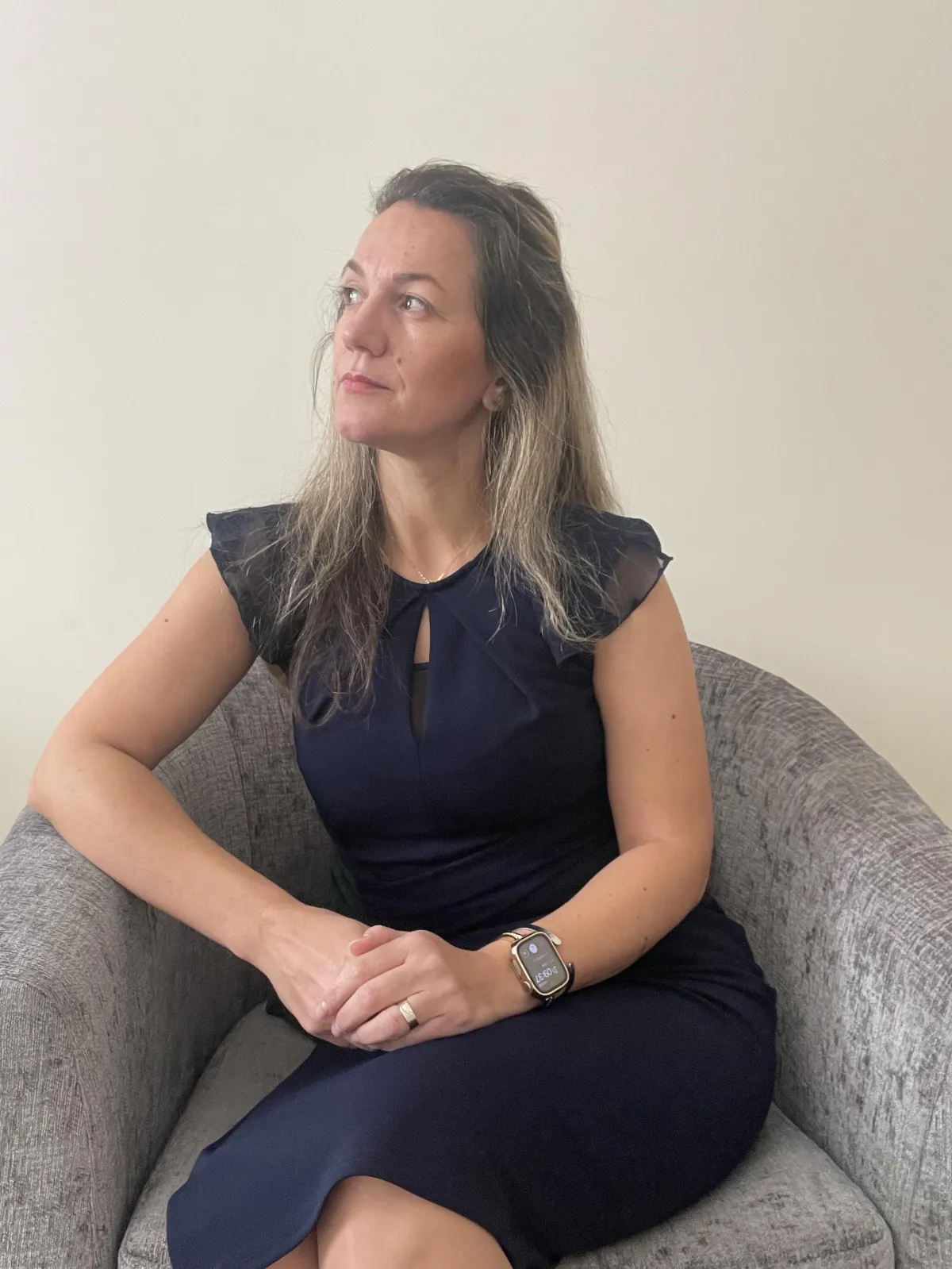
When Productivity Hurts: Rethinking Success for Women with ADHD
When Productivity Hurts: Rethinking Success for Women with ADHD
Productivity.
It’s a word that shows up everywhere—especially in conversations about work, success, and self-worth. But in my work with women challenged by ADHD, it’s a word that often carries more weight than it should.
On the surface, productivity sounds like a positive goal. Who doesn’t want to feel effective, capable, and accomplished? But beneath that surface, it can quietly become something else entirely: a source of pressure, unrealistic expectations, and deeply ingrained negative self-beliefs.
For many women with ADHD, productivity isn’t just about getting things done. It becomes a measure of worth.
And that’s where the problem begins.
The Hidden Cost of “Being Productive”
When productivity is framed without context—without considering energy, capacity, or neurodiversity—it creates a standard that is almost impossible to meet consistently.
Many of the women I work with come to me feeling overwhelmed and defeated. Their words are often strikingly similar:
“I feel like a failure.”
“I missed my deadlines.”
“Everything feels too much.”
“I can’t mess this up.”
“I have to be productive.”
At first glance, it might seem like a time management issue or a lack of discipline. But when we dig deeper, it’s rarely about the task itself.
Instead, it’s about what productivity means to them.
Where These Beliefs Come From
These intense feelings around productivity don’t appear out of nowhere. They are often rooted in early experiences and internalised messages such as:
“If you don’t achieve, you won’t be accepted.”
“If you fail, you are not good enough.”
“Your worth depends on what you produce.”
For some, these beliefs come from subtle cues in childhood. For others, they stem from growing up around high-achieving parental figures, where success seemed like the baseline expectation.
Over time, these messages become internal rules.
So when productivity drops—as it naturally does for any human being, it doesn’t just feel inconvenient. It feels personal.
It hits the core of the being.
The Missing Piece: Capacity
One of the biggest shifts that happens when working with ADHD clients is understanding capacity.
Productivity is not just about time. It’s about energy.
To function well, we all need certain foundational conditions:
Adequate rest (physical, cognitive, and emotional)
Consistent, nutritious food
Regular movement—even something as simple as stretching
Without these, expecting sustained productivity is unrealistic.
Yet many women plan their days as if they are machines—ignoring fatigue, emotional load, and mental bandwidth.
This mismatch between expectations and reality is what creates the cycle of burnout and self-criticism.
Why Traditional Productivity Advice Falls Short
You’ve probably heard the usual advice:
“Just stay organised.”
“Plan your day better.”
“Break things down.”
While these strategies can help, they are not enough on their own—especially when ADHD challenges are present.
The issue isn’t a lack of tools. It’s the way those tools are applied.
When planning is done without considering energy levels, or when goals are based on comparison with others, it sets the stage for disappointment.
And every time a plan isn’t completed, it reinforces the belief:
“I’m not capable.”
A More Supportive Approach to Productivity
So what actually works?
It starts with shifting the definition of productivity—from something rigid and external to something flexible and self-aware.
Here are some key principles that make a difference:
1. Start Smaller Than You Think
Breaking tasks into small steps is helpful—but for ADHD, the smaller, the better.
Not “write report.”
But “open document.”
Then “write one sentence.”
This reduces overwhelm and makes starting easier, which is often the hardest part.
2. Use Structure—But Keep It Flexible
Having a clear structure can provide stability. Tools like planners, timers, or check-ins can help guide focus.
But structure should support you—not restrict you.
Flexibility is essential. Some days will have more capacity than others, and your plan should reflect that.
3. Plan with the SMART Framework
Using the SMART approach (Specific, Measurable, Achievable, Realistic, Time-bound) can help create clarity and direction.
But the most important parts here are achievable and realistic.
If a goal doesn’t match your current capacity, it’s not a good goal—it’s a setup for frustration.
4. Plan for Energy, Not Just Time
Instead of asking, “What do I need to get done today?” try asking:
“What do I realistically have the energy for today?”
This simple shift can reduce pressure and increase follow-through.
5. Let Go of Comparison
Comparing your productivity to others is one of the fastest ways to feel inadequate.
Your rhythm, focus patterns, and energy cycles are unique.
Working with that, rather than against it, is where real progress happens.
What Happens When the Shift Occurs
When women begin to understand themselves—when they recognise their patterns, their limits, and their strengths—something powerful happens.
Productivity stops feeling heavy.
Tasks feel more manageable.
There’s more room for self-compassion.
And perhaps most importantly, the internal narrative begins to change.
Instead of:
“I’m a failure.”
It becomes:
“I’m learning how to work with my brain.”
Redefining Productivity
Maybe the goal isn’t to be more productive.
Maybe the goal is to feel more aligned, more supported, and more sustainable in how you approach your work and your life.
Because true productivity isn’t about doing more at any cost.
It’s about doing what matters—in a way that respects your capacity.
Final Thought
If productivity has ever made you feel like you’re not enough, it might be time to question the definition you’ve been using.
You are not behind.
You are not failing.
You may simply be trying to function within a system that was never designed with your brain in mind.
And once you begin to adjust that system—to make it more compassionate, more flexible, and more realistic—everything can start to feel a little lighter.
And a lot more achievable.
And be kinder to yourself💎
#ADHDinWomen #Neurodiversity #ExecutiveFunction #BurnoutRecovery #ADHDTips